Affiliate Marketing vs. Display Ads: 2026 Hybrid Strategy.
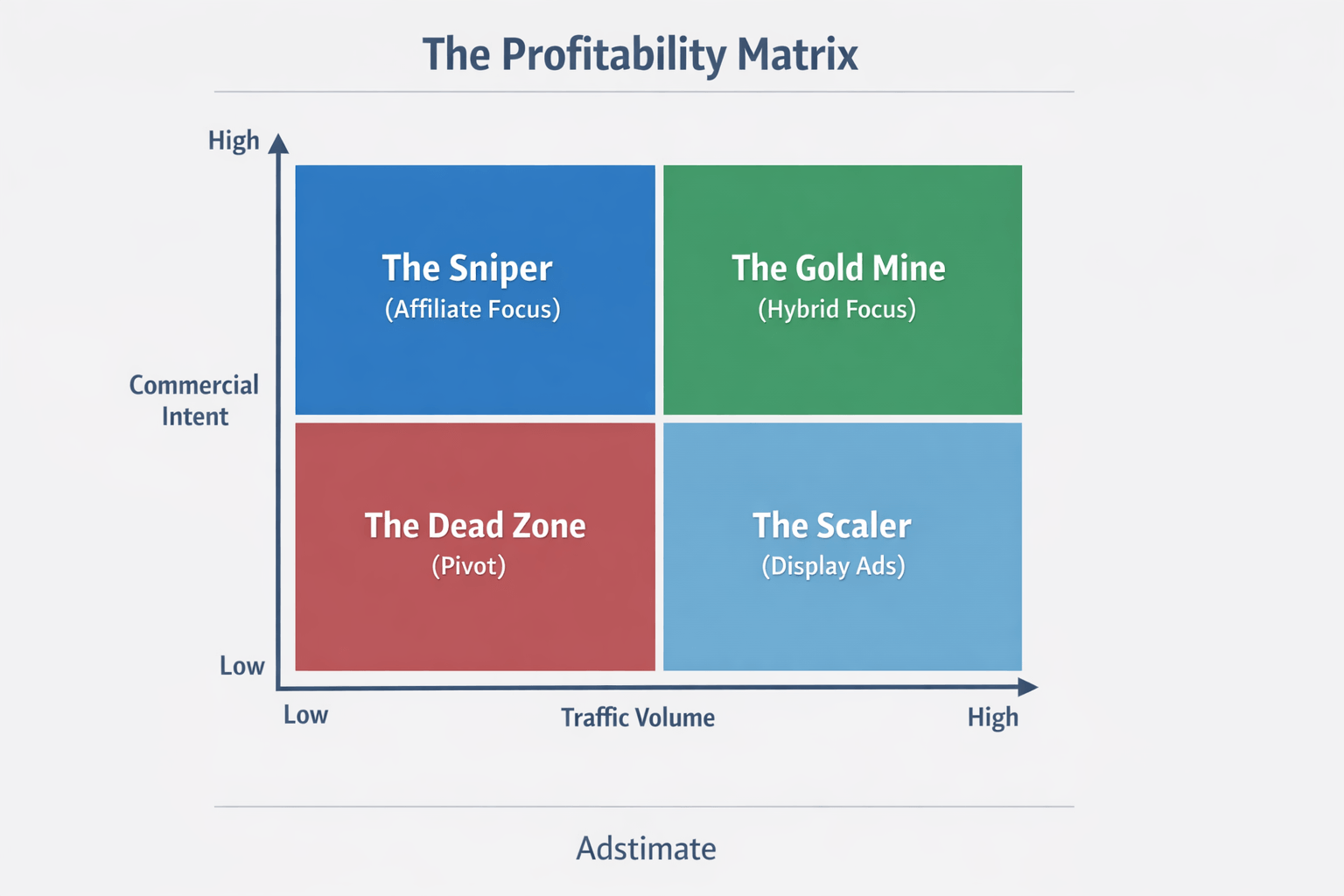
The internet loves false choices. Affiliate marketing vs display ads. SEO vs social. Long-form vs short-form. If you listen to most "gurus", you’d think you have to pick a religion and stick to it until your domain expires. The truth? The sites that scale to six and seven figures in 2026 don't choose—they integrate. If you are only running one model, you aren't just leaving money on the table; you’re building a business with a single point of failure.
Most bloggers are currently stuck in one of two traps: they are either seeing their affiliate sites fail because of commission cuts and low traffic, or they are watching their AdSense sites plateau because they’ve hit an RPM ceiling. To break through, you need to stop asking which is better and start asking how they can work together. This is the hybrid monetization strategy that turns a simple blog into a digital powerhouse.
Section 1: The Monetization Myth
The myth is that ads and affiliate links are competitors. Many publishers fear that adding ads to a review page will "distract" the user and kill the affiliate sale. While ad leakage is a real concern if handled poorly, the broader myth is that your entire site must follow a single monetization path. Affiliate marketing vs display ads is not an "either-or" decision; it is a question of matching the right revenue model to the specific intent of each visitor.
Neutrality is for people who don't have bills to pay. As a strategist, your goal is to extract the maximum value from every single pixel of your layout. Whether you are looking at ads vs affiliate marketing revenue, the goal remains the same: high ROI per session.
Section 2: The Affiliate Marketing Advantage
The core appeal of affiliate marketing is its high revenue per conversion. On a well-optimized "Money Page," a single sale can earn you more than 5,000 visitors would generate in display ads. This is why affiliate marketing works best with commercial intent traffic. When someone searches for "best hosting for bloggers" or a specific "product review," they are deep in the buying funnel. They aren't looking for info; they are looking for a reason to click "Buy."
In these scenarios, affiliate vs ads website monetization shifts heavily toward the affiliate side. A high-ticket commission of $50 or $100 can massively outperform the average AdSense earnings for that same page. However, the downside is volatility. If you don't get the click, you get zero.
Section 3: The Display Ads Advantage
Display ads are your "baseline." They monetize every single visitor, regardless of whether they buy anything. This is the ultimate tool for monetizing informational traffic. Most of your traffic—the "How-to" guides, the "What is" tutorials, and the curiosity-driven clicks—will never buy a product through an affiliate link. Display ads allow you to turn that "curiosity traffic" into a stable revenue floor.
When you move into premium ad networks like Mediavine or Raptive, your display ads vs affiliate income gap starts to close because your RPM (Revenue Per Mille) increases. Ads provide the predictable monthly cash flow that allows you to reinvest in more content while you wait for those big affiliate "wealth spikes" to hit.
Section 4: Where Each Model Breaks
If you rely 100% on affiliate marketing, you are at the mercy of your partners. We have all seen the horror stories of Amazon slashing commissions overnight or a merchant closing their program without notice. This conversion volatility can tank your business in 24 hours.
Conversely, the display ad model has an RPM ceiling. There is only so much a brand will pay to show a banner on your site. If your traffic drops because of a Google update, your income drops linearly. Relying solely on ads makes you a "traffic slave"—you are constantly chasing more pageviews just to keep your income steady. This is why a hybrid vs AdSense earnings comparison usually favors the hybrid model for long-term safety.
Section 5: The 2026 Hybrid Model
This is the killer insight: Affiliate monetizes intent traffic. Ads monetize curiosity traffic. The hybrid model captures both by splitting monetization based on content type. In 2026, the smart publishers use this split:
| Content Type | Primary Monetization | Strategy |
|---|---|---|
| Tutorials / "How-to" | Display Ads | High-volume, informational. |
| General Guides | Ads + Affiliate | Informational with soft product mentions. |
| Product Reviews | Affiliate Only | High-intent. Disable ads to prevent leakage. |
| Comparisons / Lists | Affiliate Heavy | Commercial intent with minimal ad presence. |
By using manual ad setup, you can selectively disable ads on your high-converting review pages. This ensures that a $0.50 ad click doesn't steal a user who was about to generate a $20 affiliate commission.
Section 6: Traffic Threshold Strategy
Your monetization mix should evolve as your site grows. Here is the 2026 benchmark for blog monetization methods:
- Under 10k Visitors: Focus 80% on affiliate marketing. Your traffic is too low for display ads to pay the bills, but a few high-ticket sales can keep you motivated.
- 10k – 50k Visitors: The hybrid strategy starts here. Apply for a mid-tier ad network. Use ads for your info posts while keeping your review posts clean.
- 50k+ Visitors: Display ads become incredibly powerful. At this stage, your informational traffic is large enough that your ad revenue likely covers all your operating costs, leaving affiliate commissions as pure profit.
Section 7: Layout Strategy and Placement
To succeed with a hybrid model, your high-CTR ad placements must support, not sabotage, your affiliate conversions. On informational posts, be aggressive with ads. On affiliate-heavy posts, move your ads to the bottom of the page or remove them entirely to focus the user’s gaze on your "Call to Action" buttons.
Avoid placing a massive display banner directly above an affiliate comparison table. Heatmaps show that users will often click the ad because it’s more visually prominent, causing you to lose the far more valuable affiliate lead. This is the ad-affiliate collision that kills ROI.
The Bottom Line
Stop asking the wrong question. It isn't affiliate marketing vs display ads. It is about building a diversified digital asset that can survive a commission cut and a traffic dip simultaneously. By using the hybrid model, you capture both the high-ceiling potential of affiliate sales and the stable, every-visitor revenue of display ads.
Take back control of your revenue. Stop letting "one-way" thinkers limit your growth. Build the hybrid engine today, and start watching your ROI reflect the true value of your traffic.